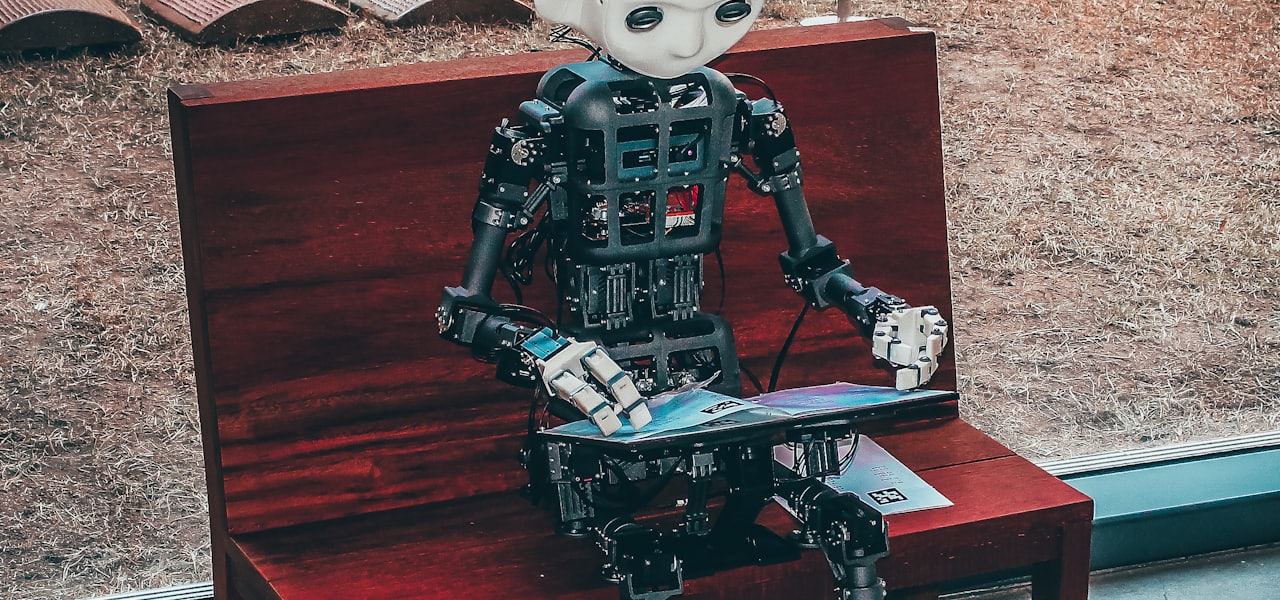
VACUUM is a set of normative guidance principles for achieving training and test dataset quality for structured datasets in data science and machine learning. The garbage-in, garbage out principle motivates a solution to the problem of data quality but does not offer a specific solution. Unlike the majority of the ad-hoc data quality assessment metrics often used by practitioners VACUUM specifies qualitative principles for data quality management and serves as a basis for defining more detailed quantitative metrics of data quality. VACUUM is an acronym that stands for: valid accurate consistent uniform unified model
Data augmentation
Data augmentation is a statistical technique which allows maximum likelihood estimation from incomplete data. Data augmentation has important applications in Bayesian analysis, and the technique is widely used in machine learning to reduce overfitting when training machine learning models, achieved by training models on several slightly-modified copies of existing data. == Synthetic oversampling techniques for traditional machine learning == Synthetic Minority Over-sampling Technique (SMOTE) is a method used to address imbalanced datasets in machine learning. In such datasets, the number of samples in different classes varies significantly, leading to biased model performance. For example, in a medical diagnosis dataset with 90 samples representing healthy individuals and only 10 samples representing individuals with a particular disease, traditional algorithms may struggle to accurately classify the minority class. SMOTE rebalances the dataset by generating synthetic samples for the minority class. For instance, if there are 100 samples in the majority class and 10 in the minority class, SMOTE can create synthetic samples by randomly selecting a minority class sample and its nearest neighbors, then generating new samples along the line segments joining these neighbors. This process helps increase the representation of the minority class, improving model performance. == Data augmentation for image classification == When convolutional neural networks grew larger in mid-1990s, there was a lack of data to use, especially considering that some part of the overall dataset should be spared for later testing. It was proposed to perturb existing data with affine transformations to create new examples with the same labels, which were complemented by so-called elastic distortions in 2003, and the technique was widely used as of 2010s. Data augmentation can enhance CNN performance and acts as a countermeasure against CNN profiling attacks. Data augmentation has become fundamental in image classification, enriching training dataset diversity to improve model generalization and performance. The evolution of this practice has introduced a broad spectrum of techniques, including geometric transformations, color space adjustments, and noise injection. === Geometric Transformations === Geometric transformations alter the spatial properties of images to simulate different perspectives, orientations, and scales. Common techniques include: Affine Transformation Rotation: Rotating images by a specified degree to help models recognize objects at various angles. Reflection: Reflecting images horizontally or vertically to introduce variability in orientation. Translation: Shifting images in different directions to teach models positional invariance. Scaling Shear Mapping Cropping: Removing sections of the image to focus on particular features or simulate closer views. Elastic Distortion Morphing within the same class: Generating new samples by applying morphing techniques between two images belonging to the same class, thereby increasing intra-class diversity. === Color Space Transformations === Color space transformations modify the color properties of images, addressing variations in lighting, color saturation, and contrast. Techniques include: Brightness Adjustment: Varying the image's brightness to simulate different lighting conditions. Contrast Adjustment: Changing the contrast to help models recognize objects under various clarity levels. Saturation Adjustment: Altering saturation to prepare models for images with diverse color intensities. Color Jittering: Randomly adjusting brightness, contrast, saturation, and hue to introduce color variability. === Noise Injection === Injecting noise into images simulates real-world imperfections, teaching models to ignore irrelevant variations. Techniques involve: Gaussian Noise: Adding Gaussian noise mimics sensor noise or graininess. Salt and Pepper Noise: Introducing black or white pixels at random simulates sensor dust or dead pixels. == Data augmentation for signal processing == Residual or block bootstrap can be used for time series augmentation. === Biological signals === Synthetic data augmentation is of paramount importance for machine learning classification, particularly for biological data, which tend to be high dimensional and scarce. The applications of robotic control and augmentation in disabled and able-bodied subjects still rely mainly on subject-specific analyses. Data scarcity is notable in signal processing problems such as for Parkinson's Disease Electromyography signals, which are difficult to source - Zanini, et al. noted that it is possible to use a generative adversarial network (in particular, a DCGAN) to perform style transfer in order to generate synthetic electromyographic signals that corresponded to those exhibited by sufferers of Parkinson's Disease. The approaches are also important in electroencephalography (brainwaves). Wang, et al. explored the idea of using deep convolutional neural networks for EEG-Based Emotion Recognition, results show that emotion recognition was improved when data augmentation was used. A common approach is to generate synthetic signals by re-arranging components of real data. Lotte proposed a method of "Artificial Trial Generation Based on Analogy" where three data examples x 1 , x 2 , x 3 {\displaystyle x_{1},x_{2},x_{3}} provide examples and an artificial x s y n t h e t i c {\displaystyle x_{synthetic}} is formed which is to x 3 {\displaystyle x_{3}} what x 2 {\displaystyle x_{2}} is to x 1 {\displaystyle x_{1}} . A transformation is applied to x 1 {\displaystyle x_{1}} to make it more similar to x 2 {\displaystyle x_{2}} , the same transformation is then applied to x 3 {\displaystyle x_{3}} which generates x s y n t h e t i c {\displaystyle x_{synthetic}} . This approach was shown to improve performance of a Linear Discriminant Analysis classifier on three different datasets. Current research shows great impact can be derived from relatively simple techniques. For example, Freer observed that introducing noise into gathered data to form additional data points improved the learning ability of several models which otherwise performed relatively poorly. Tsinganos et al. studied the approaches of magnitude warping, wavelet decomposition, and synthetic surface EMG models (generative approaches) for hand gesture recognition, finding classification performance increases of up to +16% when augmented data was introduced during training. More recently, data augmentation studies have begun to focus on the field of deep learning, more specifically on the ability of generative models to create artificial data which is then introduced during the classification model training process. In 2018, Luo et al. observed that useful EEG signal data could be generated by Conditional Wasserstein Generative Adversarial Networks (GANs) which was then introduced to the training set in a classical train-test learning framework. The authors found classification performance was improved when such techniques were introduced. === Mechanical signals === The prediction of mechanical signals based on data augmentation brings a new generation of technological innovations, such as new energy dispatch, 5G communication field, and robotics control engineering. In 2022, Yang et al. integrate constraints, optimization and control into a deep network framework based on data augmentation and data pruning with spatio-temporal data correlation, and improve the interpretability, safety and controllability of deep learning in real industrial projects through explicit mathematical programming equations and analytical solutions.
Artificial development
Artificial development, also known as artificial embryogeny or machine intelligence or computational development, is an area of computer science and engineering concerned with computational models motivated by genotype–phenotype mappings in biological systems. Artificial development is often considered a sub-field of evolutionary computation, although the principles of artificial development have also been used within stand-alone computational models. Within evolutionary computation, the need for artificial development techniques was motivated by the perceived lack of scalability and evolvability of direct solution encodings (Tufte, 2008). Artificial development entails indirect solution encoding. Rather than describing a solution directly, an indirect encoding describes (either explicitly or implicitly) the process by which a solution is constructed. Often, but not always, these indirect encodings are based upon biological principles of development such as morphogen gradients, cell division and cellular differentiation (e.g. Doursat 2008), gene regulatory networks (e.g. Guo et al., 2009), degeneracy (Whitacre et al., 2010), grammatical evolution (de Salabert et al., 2006), or analogous computational processes such as re-writing, iteration, and time. The influences of interaction with the environment, spatiality and physical constraints on differentiated multi-cellular development have been investigated more recently (e.g. Knabe et al. 2008). Artificial development approaches have been applied to a number of computational and design problems, including electronic circuit design (Miller and Banzhaf 2003), robotic controllers (e.g. Taylor 2004), and the design of physical structures (e.g. Hornby 2004).
Oja's rule
Oja's learning rule, or simply Oja's rule, named after Finnish computer scientist Erkki Oja (Finnish pronunciation: [ˈojɑ], AW-yuh), is a model of how neurons in the brain or in artificial neural networks change connection strength, or learn, over time. It is a modification of the standard Hebb's Rule that, through multiplicative normalization, solves all stability problems and generates an algorithm for principal components analysis. This is a computational form of an effect which is believed to happen in biological neurons. == Theory == Oja's rule requires a number of simplifications to derive, but in its final form it is demonstrably stable, unlike Hebb's rule. It is a single-neuron special case of the Generalized Hebbian Algorithm. However, Oja's rule can also be generalized in other ways to varying degrees of stability and success. === Formula === Consider a simplified model of a neuron y {\displaystyle y} that returns a linear combination of its inputs x using presynaptic weights w: y ( x ) = ∑ j = 1 m x j w j {\displaystyle \,y(\mathbf {x} )~=~\sum _{j=1}^{m}x_{j}w_{j}} Oja's rule defines the change in presynaptic weights w given the output response y {\displaystyle y} of a neuron to its inputs x to be Δ w = w n + 1 − w n = η y n ( x n − y n w n ) , {\displaystyle \,\Delta \mathbf {w} ~=~\mathbf {w} _{n+1}-\mathbf {w} _{n}~=~\eta \,y_{n}(\mathbf {x} _{n}-y_{n}\mathbf {w} _{n}),} where η is the learning rate which can also change with time. Note that the bold symbols are vectors and n defines a discrete time iteration. The rule can also be made for continuous iterations as d w d t = η y ( t ) ( x ( t ) − y ( t ) w ( t ) ) . {\displaystyle \,{\frac {d\mathbf {w} }{dt}}~=~\eta \,y(t)(\mathbf {x} (t)-y(t)\mathbf {w} (t)).} === Derivation === The simplest learning rule known is Hebb's rule, which states in conceptual terms that neurons that fire together, wire together. In component form as a difference equation, it is written Δ w = η y ( x n ) x n {\displaystyle \,\Delta \mathbf {w} ~=~\eta \,y(\mathbf {x} _{n})\mathbf {x} _{n}} , or in scalar form with implicit n-dependence, w i ( n + 1 ) = w i ( n ) + η y ( x ) x i {\displaystyle \,w_{i}(n+1)~=~w_{i}(n)+\eta \,y(\mathbf {x} )x_{i}} , where y(xn) is again the output, this time explicitly dependent on its input vector x. Hebb's rule has synaptic weights approaching infinity with a positive learning rate. We can stop this by normalizing the weights so that each weight's magnitude is restricted between 0, corresponding to no weight, and 1, corresponding to being the only input neuron with any weight. We do this by normalizing the weight vector to be of length one: w i ( n + 1 ) = w i ( n ) + η y ( x ) x i ( ∑ j = 1 m [ w j ( n ) + η y ( x ) x j ] p ) 1 / p {\displaystyle \,w_{i}(n+1)~=~{\frac {w_{i}(n)+\eta \,y(\mathbf {x} )x_{i}}{\left(\sum _{j=1}^{m}[w_{j}(n)+\eta \,y(\mathbf {x} )x_{j}]^{p}\right)^{1/p}}}} . Note that in Oja's original paper, p=2, corresponding to quadrature (root sum of squares), which is the familiar Cartesian normalization rule. However, any type of normalization, even linear, will give the same result without loss of generality. For a small learning rate | η | ≪ 1 {\displaystyle |\eta |\ll 1} the equation can be expanded as a Power series in η {\displaystyle \eta } . w i ( n + 1 ) = w i ( n ) ( ∑ j w j p ( n ) ) 1 / p + η ( y x i ( ∑ j w j p ( n ) ) 1 / p − w i ( n ) ∑ j y x j w j p − 1 ( n ) ( ∑ j w j p ( n ) ) ( 1 + 1 / p ) ) + O ( η 2 ) {\displaystyle \,w_{i}(n+1)~=~{\frac {w_{i}(n)}{\left(\sum _{j}w_{j}^{p}(n)\right)^{1/p}}}~+~\eta \left({\frac {yx_{i}}{\left(\sum _{j}w_{j}^{p}(n)\right)^{1/p}}}-{\frac {w_{i}(n)\sum _{j}yx_{j}w_{j}^{p-1}(n)}{\left(\sum _{j}w_{j}^{p}(n)\right)^{(1+1/p)}}}\right)~+~O(\eta ^{2})} . For small η, our higher-order terms O(η2) go to zero. We again make the specification of a linear neuron, that is, the output of the neuron is equal to the sum of the product of each input and its synaptic weight to the power of p-1, which in the case of p=2 is synaptic weight itself, or y ( x ) = ∑ j = 1 m x j w j p − 1 {\displaystyle \,y(\mathbf {x} )~=~\sum _{j=1}^{m}x_{j}w_{j}^{p-1}} . We also specify that our weights normalize to 1, which will be a necessary condition for stability, so | w | = ( ∑ j = 1 m w j p ) 1 / p = 1 {\displaystyle \,|\mathbf {w} |~=~\left(\sum _{j=1}^{m}w_{j}^{p}\right)^{1/p}~=~1} , which, when substituted into our expansion, gives Oja's rule, or w i ( n + 1 ) = w i ( n ) + η y ( x i − w i ( n ) y ) {\displaystyle \,w_{i}(n+1)~=~w_{i}(n)+\eta \,y(x_{i}-w_{i}(n)y)} . === Stability and PCA === In analyzing the convergence of a single neuron evolving by Oja's rule, one extracts the first principal component, or feature, of a data set. Furthermore, with extensions using the Generalized Hebbian Algorithm, one can create a multi-Oja neural network that can extract as many features as desired, allowing for principal components analysis. A principal component aj is extracted from a dataset x through some associated vector qj, or aj = qj⋅x, and we can restore our original dataset by taking x = ∑ j a j q j {\displaystyle \mathbf {x} ~=~\sum _{j}a_{j}\mathbf {q} _{j}} . In the case of a single neuron trained by Oja's rule, we find the weight vector converges to q1, or the first principal component, as time or number of iterations approaches infinity. We can also define, given a set of input vectors Xi, that its correlation matrix Rij = XiXj has an associated eigenvector given by qj with eigenvalue λj. The variance of outputs of our Oja neuron σ2(n) = ⟨y2(n)⟩ then converges with time iterations to the principal eigenvalue, or lim n → ∞ σ 2 ( n ) = λ 1 {\displaystyle \lim _{n\rightarrow \infty }\sigma ^{2}(n)~=~\lambda _{1}} . These results are derived using Lyapunov function analysis, and they show that Oja's neuron necessarily converges on strictly the first principal component if certain conditions are met in our original learning rule. Most importantly, our learning rate η is allowed to vary with time, but only such that its sum is divergent but its power sum is convergent, that is ∑ n = 1 ∞ η ( n ) = ∞ , ∑ n = 1 ∞ η ( n ) p < ∞ , p > 1 {\displaystyle \sum _{n=1}^{\infty }\eta (n)=\infty ,~~~\sum _{n=1}^{\infty }\eta (n)^{p}<\infty ,~~~p>1} . Our output activation function y(x(n)) is also allowed to be nonlinear and nonstatic, but it must be continuously differentiable in both x and w and have derivatives bounded in time. == Applications == Oja's rule was originally described in Oja's 1982 paper, but the principle of self-organization to which it is applied is first attributed to Alan Turing in 1952. PCA has also had a long history of use before Oja's rule formalized its use in network computation in 1989. The model can thus be applied to any problem of self-organizing mapping, in particular those in which feature extraction is of primary interest. Therefore, Oja's rule has an important place in image and speech processing. It is also useful as it expands easily to higher dimensions of processing, thus being able to integrate multiple outputs quickly. A canonical example is its use in binocular vision. === Biology and Oja's subspace rule === There is clear evidence for both long-term potentiation and long-term depression in biological neural networks, along with a normalization effect in both input weights and neuron outputs. However, while there is no direct experimental evidence yet of Oja's rule active in a biological neural network, a biophysical derivation of a generalization of the rule is possible. Such a derivation requires retrograde signalling from the postsynaptic neuron, which is biologically plausible (see neural backpropagation), and takes the form of Δ w i j ∝ ⟨ x i y j ⟩ − ϵ ⟨ ( c p r e ∗ ∑ k w i k y k ) ⋅ ( c p o s t ∗ y j ) ⟩ , {\displaystyle \Delta w_{ij}~\propto ~\langle x_{i}y_{j}\rangle -\epsilon \left\langle \left(c_{\mathrm {pre} }\sum _{k}w_{ik}y_{k}\right)\cdot \left(c_{\mathrm {post} }y_{j}\right)\right\rangle ,} where as before wij is the synaptic weight between the ith input and jth output neurons, x is the input, y is the postsynaptic output, and we define ε to be a constant analogous the learning rate, and cpre and cpost are presynaptic and postsynaptic functions that model the weakening of signals over time. Note that the angle brackets denote the average and the ∗ operator is a convolution. By taking the pre- and post-synaptic functions into frequency space and combining integration terms with the convolution, we find that this gives an arbitrary-dimensional generalization of Oja's rule known as Oja's Subspace, namely Δ w = C x ⋅ w − w ⋅ C y . {\displaystyle \Delta w~=~Cx\cdot w-w\cdot Cy.}
Santa Fe Trail problem
The Santa Fe Trail problem is a genetic programming exercise in which artificial ants search for food pellets according to a programmed set of instructions. The layout of food pellets in the Santa Fe Trail problem has become a standard for comparing different genetic programming algorithms and solutions. One method for programming and testing algorithms on the Santa Fe Trail problem is by using the NetLogo application. There is at least one case of a student creating a Lego robotic ant to solve the problem.
StatCrunch
StatCrunch is a web-based statistical software application from Pearson Education. StatCrunch was originally created for use in college statistics courses. As a full-featured statistics package, it is now also used for research and for other statistical analysis purposes. == History == American statistics professor Webster West created StatCrunch in 1997. Over the next 19 years West assisted by others added many more statistical procedures and graphing capabilities, and made user interface improvements. In 2005, West received two awards for StatCrunch: the CAUSEweb Resource of the Year Award and the MERLOT Classics Award. In 2013, the StatCrunch Java code was rewritten in JavaScript in order to avoid Java browser security problems, and so that it would run on iOS and Android. In 2015, new ways of importing data were added, including importing multi-page data directly from Wikipedia tables and other Web sources, and also importing with drag-and-drop for various data formats. In 2016, StatCrunch was acquired by Pearson Education, which had already been serving as the primary distributor of StatCrunch for several years. == Software == A StatCrunch license is included with many of Pearson's statistical textbooks. Because StatCrunch is a web application, it works on multiple platforms, including Windows, macOS, iOS, and Android. Data in StatCrunch is represented in a "data table" view, which is similar to a spreadsheet view, but unlike spreadsheets, the cells in a data table can only contain numbers or text. Formulas cannot be stored in these cells. There are many ways to import data into StatCrunch. Data can be typed directly into cells in the data table. Entire blocks of data may be cut-and-pasted into the data table. Text files (.csv, .txt, etc.) and Microsoft Excel files (.xls and .xlsx) can be drag-and-dropped into the data table. Data can be pulled into StatCrunch directly from Wikipedia tables or other Web tables, including multi-page tables. Data can be loaded directly from Google Drive and Dropbox. Shared data sets saved by other StatCrunch community users can be searched for by title or keyword and opened in a data table. Graphs, results, and reports created by StatCrunch can be shared with other users, in addition to the sharing of data sets. StatCrunch has a library of data transformation functions. StatCrunch can also recode and reorganize data. All data is stored in memory, and all processing happens on the client, so response is fast, even with large data sets. StatCrunch can interact with multiple graphs simultaneously. If a user selects a data point on one graph, then that same data point is highlighted on all other displayed graphs. In addition to standard statistical and graphing procedures, StatCrunch has a collection of about forty "applets" which illustrate statistical concepts interactively.
Swish function
The swish function is a family of mathematical function defined as follows: swish β ( x ) = x sigmoid ( β x ) = x 1 + e − β x . {\displaystyle \operatorname {swish} _{\beta }(x)=x\operatorname {sigmoid} (\beta x)={\frac {x}{1+e^{-\beta x}}}.} where β {\displaystyle \beta } can be constant (usually set to 1) or trainable and "sigmoid" refers to the logistic function. The swish family was designed to smoothly interpolate between a linear function and the Rectified linear unit (ReLU) function. When considering positive values, Swish is a particular case of doubly parameterized sigmoid shrinkage function defined in . Variants of the swish function include Mish. == Special values == For β = 0, the function is linear: f(x) = x/2. For β = 1, the function is the Sigmoid Linear Unit (SiLU). For β = 1.702, the function approximates GeLU. With β → ∞, the function converges to ReLU. Thus, the swish family smoothly interpolates between a linear function and the ReLU function. Since swish β ( x ) = swish 1 ( β x ) / β {\displaystyle \operatorname {swish} _{\beta }(x)=\operatorname {swish} _{1}(\beta x)/\beta } , all instances of swish have the same shape as the default swish 1 {\displaystyle \operatorname {swish} _{1}} , zoomed by β {\displaystyle \beta } . One usually sets β > 0 {\displaystyle \beta >0} . When β {\displaystyle \beta } is trainable, this constraint can be enforced by β = e b {\displaystyle \beta =e^{b}} , where b {\displaystyle b} is trainable. swish 1 ( x ) = x 2 + x 2 4 − x 4 48 + x 6 480 + O ( x 8 ) {\displaystyle \operatorname {swish} _{1}(x)={\frac {x}{2}}+{\frac {x^{2}}{4}}-{\frac {x^{4}}{48}}+{\frac {x^{6}}{480}}+O\left(x^{8}\right)} swish 1 ( x ) = x 2 tanh ( x 2 ) + x 2 swish 1 ( x ) + swish − 1 ( x ) = x tanh ( x 2 ) swish 1 ( x ) − swish − 1 ( x ) = x {\displaystyle {\begin{aligned}\operatorname {swish} _{1}(x)&={\frac {x}{2}}\tanh \left({\frac {x}{2}}\right)+{\frac {x}{2}}\\\operatorname {swish} _{1}(x)+\operatorname {swish} _{-1}(x)&=x\tanh \left({\frac {x}{2}}\right)\\\operatorname {swish} _{1}(x)-\operatorname {swish} _{-1}(x)&=x\end{aligned}}} == Derivatives == Because swish β ( x ) = swish 1 ( β x ) / β {\displaystyle \operatorname {swish} _{\beta }(x)=\operatorname {swish} _{1}(\beta x)/\beta } , it suffices to calculate its derivatives for the default case. swish 1 ′ ( x ) = x + sinh ( x ) 4 cosh 2 ( x 2 ) + 1 2 {\displaystyle \operatorname {swish} _{1}'(x)={\frac {x+\sinh(x)}{4\cosh ^{2}\left({\frac {x}{2}}\right)}}+{\frac {1}{2}}} so swish 1 ′ ( x ) − 1 2 {\displaystyle \operatorname {swish} _{1}'(x)-{\frac {1}{2}}} is odd. swish 1 ″ ( x ) = 1 − x 2 tanh ( x 2 ) 2 cosh 2 ( x 2 ) {\displaystyle \operatorname {swish} _{1}''(x)={\frac {1-{\frac {x}{2}}\tanh \left({\frac {x}{2}}\right)}{2\cosh ^{2}\left({\frac {x}{2}}\right)}}} so swish 1 ″ ( x ) {\displaystyle \operatorname {swish} _{1}''(x)} is even. == History == SiLU was first proposed alongside the GELU in 2016, then again proposed in 2017 as the Sigmoid-weighted Linear Unit (SiL) in reinforcement learning. The SiLU/SiL was then again proposed as the SWISH over a year after its initial discovery, originally proposed without the learnable parameter β, so that β implicitly equaled 1. The swish paper was then updated to propose the activation with the learnable parameter β. In 2017, after performing analysis on ImageNet data, researchers from Google indicated that using this function as an activation function in artificial neural networks improves the performance, compared to ReLU and sigmoid functions. It is believed that one reason for the improvement is that the swish function helps alleviate the vanishing gradient problem during backpropagation.